

POST TITLE

Androgenic alopecia (hereditary hair loss) is the most common cause of hair loss in men, accounting for 95% of cases of male hair loss. It is commonly known as baldness.
Baldness is largely caused by the miniaturisation of hair follicles due to dihydrotestosterone, commonly known as DHT. In cases of androgenic alopecia, the hair follicle receptors are sensitive to this hormone. Hair becomes increasingly thin over the years, causing baldness on the top of the head.
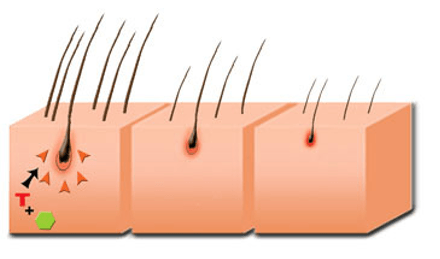
How to Recognize Male Pattern Baldness?
Androgenic alopecia in men follows a very regular pattern, with receding temples and a receding hairline, followed by thinning at the crown and on top, until eventually the "crown" of hair is gone.
What Should You Do if You Notice the First Signs of Baldness?
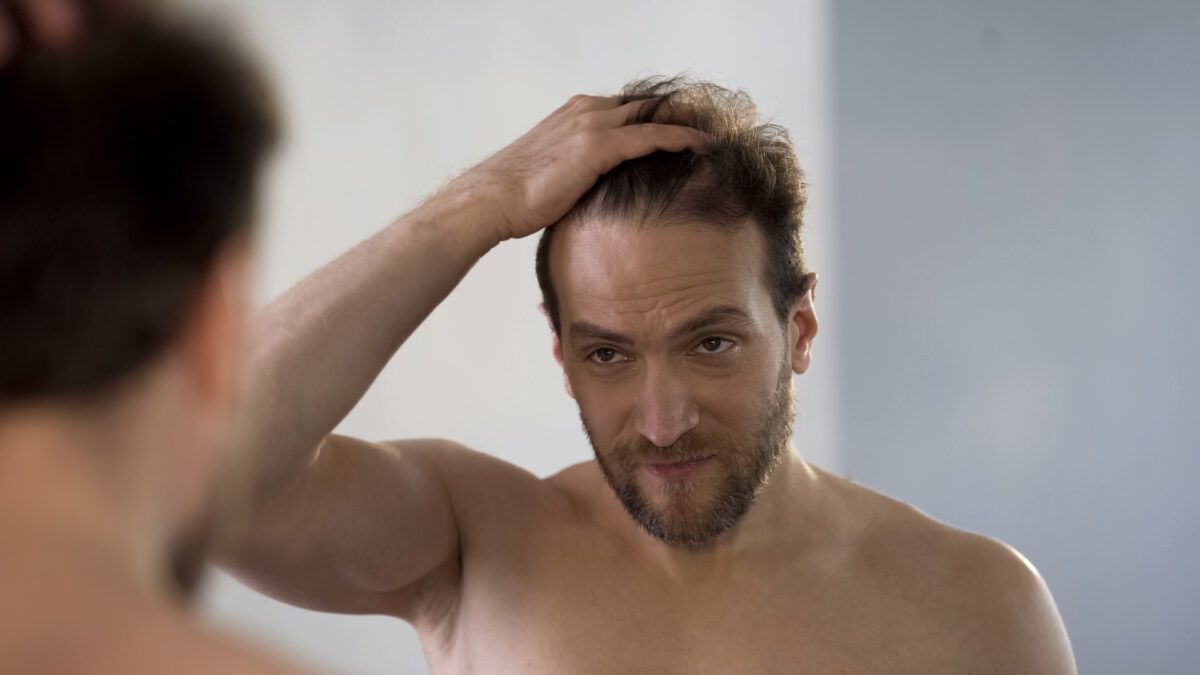
At the first signs of androgenic alopecia, such as a pronounced receding hairline at the temples or even a slight thinning at the crown, it is recommended that you consult a trichologist to assess your options and learn more about the various preventive solutions available to you.
Why Act as Soon as Possible?
As baldness is a genetic condition, it is difficult to completely stop the hair loss process, but there are several solutions available to significantly slow down the rate at which the condition progresses.
If no preventive measures are taken, the hair falls into a miniaturisation phase until it becomes so small that it no longer protrudes from the epidermis, and eventually follicular activity ceases completely, making it impossible to control or reverse hair loss. At this stage, only corrective measures such as hair transplants, hair prostheses or micropigmentation are possible.
However, when the current hair density is still visually appealing, solutions such as laser therapy, mesotherapy, PRP treatments and salon trichology treatments are effective in controlling and stabilising the condition.
Consult a Capilia expert now to find out what course of action is available to you.

Alexandra Godbout, IAT
Certified Trichologist
Centre Director at Capilia Brossard